
What to Expect at Your Kitten's First Vet Visit
Your kitten's first vet visit includes a thorough physical exam, fecal and blood tests, core vaccinations, and a discussion of parasite prevention and nutrition. The vet will check your kitten's eyes, ears, mouth, skin, coat, and entire body for abnormalities and screen for parasites like fleas, mites, and worms.
What to Expect During Your Kitten's First Vet Visit: The Physical Exam
- Initial greeting and history – Our team will ask about your kitten's age, diet, elimination habits, and any concerns you have. This helps us tailor the exam to your kitten's specific needs.
- Weight and temperature check – Your kitten will be weighed to track growth, and a rectal temperature will be taken to ensure it's within a normal range. This is quick but important for detecting early illness.
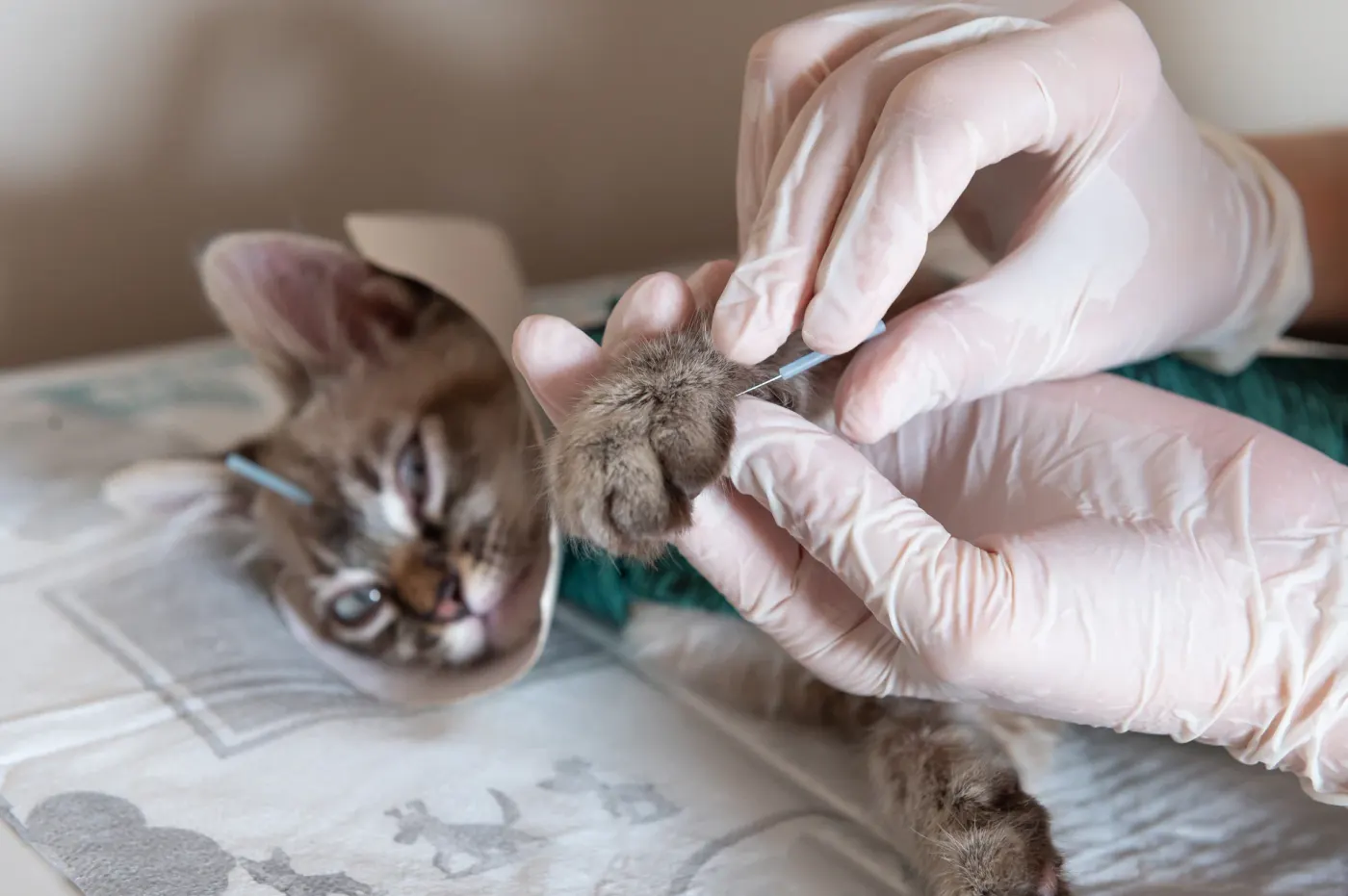
- Head-to-tail physical exam – Your veterinarian will examine your kitten's eyes, ears, mouth, skin, coat, and entire body. We look for signs of parasites such as fleas, mites, and worms, as well as any abnormalities in the ears, eyes, teeth, gums, and lymph nodes. The vet will also listen to the heart and lungs with a stethoscope and palpate the abdomen to check internal organs.
- Parasite screening and fecal exam – A fecal floatation test checks for intestinal parasites like roundworms and hookworms. Your vet will also look for external parasites like fleas and mites on the skin and coat.
- Vaccinations and deworming – Core vaccines, including the FVRCP (feline viral rhinotracheitis, calicivirus, and panleukopenia), are typically administered. Deworming medication may be given if parasites are found.
- Discussion and next steps – Your vet will review findings, discuss a vaccination schedule, parasite prevention, nutrition, and answer any questions. A follow-up visit is usually scheduled for boosters.
After Your Kitten's First Vet Visit: Next Steps and Kitten Care
- Follow the 3-3-3 rule for cats – Give your kitten three days to decompress, three weeks to learn your routine, and three months to feel fully at home. This helps reduce stress and builds trust.
- Set up a safe sleeping area – For the first few nights, let your kitten sleep in a small, quiet room with a cozy bed, litter box, food, and water. This prevents nighttime anxiety and accidents. Avoid letting a new kitten roam the house at night until they are comfortable and litter-trained.
- Schedule follow-up vaccinations – Kittens need a series of booster shots every 3–4 weeks until about 16 weeks old. Your vet will provide a personalized schedule. Deworming may also need to be repeated.
- Monitor for any health changes – Watch for signs of illness like vomiting, diarrhea, sneezing, or lethargy. Contact us immediately if you notice anything unusual.
- Plan for spaying or neutering – Discuss the best age for this procedure with your vet, typically around 5–6 months. It prevents unwanted litters and offers health benefits.
- Introduce your kitten to other pets gradually – Use scent swapping and supervised meetings over several days to ensure a smooth introduction.
How to Prepare for Your Kitten's First Vet Visit: A Checklist
- Bring a fresh fecal sample – Collect a small sample (about the size of a marble) within 12 hours of your visit and store it in a clean container. This allows us to test for intestinal parasites.
- Use a secure carrier – Place your kitten in a well-ventilated, escape-proof carrier lined with a soft towel. This reduces stress and keeps your kitten safe during travel.
- Bring any medical records – If you adopted your kitten, bring any vaccination records, deworming history, or health certificates from the shelter or breeder.
- Prepare a list of questions – Write down any concerns about feeding, behavior, litter box training, or health. This ensures you don't forget anything during the visit.
- Keep your kitten calm – Avoid feeding a large meal right before the visit. Speak softly and bring a favorite toy or blanket to comfort your kitten.
First Vet Visit Tests and Vaccinations: What to Expect for Your Kitten
| Test or Vaccine | What It Checks/Prevents | When Given |
|---|---|---|
| Fecal floatation test | Intestinal parasites (roundworms, hookworms, giardia) | First visit; repeat if positive |
| FeLV/FIV blood test | Feline leukemia virus and feline immunodeficiency virus | First visit, especially for kittens with unknown history |
| Core vaccine (FVRCP) | Feline viral rhinotracheitis, calicivirus, panleukopenia | First visit; boosters every 3–4 weeks until 16 weeks |
| Deworming medication | Treats common intestinal worms | Based on fecal results; often repeated |
| Microchipping | Permanent identification in case your kitten gets lost | Can be done at first visit or later |
Your veterinarian will recommend a schedule based on your kitten's age, health, and lifestyle. Most kittens need a series of visits to complete their initial vaccinations.
Directions to our veterinarian in Fremont, CA from Centerville Pioneer Cemetery
Start at Centerville Pioneer Cemetery and head to Aborn Pet Hospital at 40951 Grimmer Blvd, Fremont, CA 94538.
When to Schedule Your Kitten's First Vet Visit: Age Guidelines
| Kitten Age | Recommended Action |
|---|---|
| 6–8 weeks | Schedule first vet visit for initial exam, vaccines, and parasite screening |
| 8–12 weeks | Second visit for booster vaccines and follow-up deworming |
| 12–16 weeks | Third visit for final boosters and rabies vaccine (if not given earlier) |
| 16 weeks and older | Complete initial vaccine series; discuss spay/neuter and microchipping |
If you adopt a kitten older than 8 weeks, schedule the first visit as soon as possible. Kittens should start their vaccine series by 6–8 weeks for optimal protection.
Kitten First Vet Visit Cost: What to Expect
| Factor | Why It Matters | Typical Range |
|---|---|---|
| Initial exam fee | Covers the veterinarian's time and expertise for the physical exam | Varies; new clients may receive a free first exam (terms apply) |
| Fecal exam | Checks for intestinal parasites; often recommended for all kittens | Varies by clinic |
| FeLV/FIV blood test | Screen for serious viral diseases; important for kittens with unknown history | Varies |
| Core vaccines (FVRCP) | First in a series of shots; cost includes the vaccine and administration | Varies; ask for a quote |
| Deworming medication | Treats common parasites; may be included or charged separately | Varies |
Total costs vary depending on your kitten's needs and location. We recommend calling us for a personalized estimate. We accept credit cards, cash, and CareCredit to help manage expenses.
Find a Kitten Vet Near You in Fremont
If you're in Fremont, CA, or nearby areas like Newark, Union City, Milpitas, or Hayward, Aborn Pet Hospital is here to help. We've been serving the community since 1987 and have over 900 five-star reviews. Our team provides compassionate care for kittens, including wellness exams, vaccinations, diagnostics, and more.
- Call us to schedule – Reach us at (510) 656-0223 during our hours: Monday–Friday 8 AM–6 PM, Saturday 8 AM–5 PM. We're closed on Sundays.
- Visit our location – We're at 40951 Grimmer Blvd, Fremont, CA 94538, near Washington College and Fremont Central Park.
- Bring your kitten in a carrier – A secure carrier helps keep your kitten calm and safe during the visit.
- Ask about our new client offer – New clients receive a free first exam (terms apply).
We also offer veterinarian Fremont CA services for dogs, cats, and some exotics like rabbits and guinea pigs. For more on keeping your kitten healthy, see our guide on [[parasite-prevention-fremont-cost|parasite prevention Fremont cost]] and [[pet-diagnostics-fremont-appointment|pet diagnostics Fremont appointment]].
Sources
Also asked as
- What should I expect at my kitten's first vet appointment?
- What happens at a kitten's first vet visit?
- What do vets do at a kitten's first checkup?
Frequently asked questions
How old should a kitten have to be to visit the first vet visit?
Kittens should have their first vet visit at around 6 to 8 weeks of age. This is the ideal time to start vaccinations, screen for parasites, and get a baseline health check. If you adopt a kitten older than 8 weeks, schedule the visit as soon as possible.
What is the 3-3-3 rule for cats?
The 3-3-3 rule is a guideline for helping a new cat or kitten adjust to your home: three days to decompress, three weeks to learn your routine, and three months to feel fully comfortable. It emphasizes patience and gradual introductions to reduce stress.
Can I leave my 8 week old kitten alone at night?
It's best not to leave an 8-week-old kitten alone all night. Instead, set up a safe, confined space with a bed, litter box, food, and water. This prevents accidents and helps the kitten feel secure. As they grow and become litter-trained, you can gradually give them more freedom.
What supplies do I need for a new kitten?
Essential supplies include a carrier, food and water bowls, high-quality kitten food, a litter box and litter, a scratching post, toys, a bed, and a brush. You'll also need a collar and ID tag. A vet visit checklist should include bringing any medical records and a fresh fecal sample.
Where should a kitten sleep the first night home?
The first night, let your kitten sleep in a small, quiet room like a bathroom or spare bedroom. Provide a cozy bed, litter box, food, and water. This helps them feel safe and prevents them from getting into trouble. Avoid letting them roam the whole house until they are comfortable.